


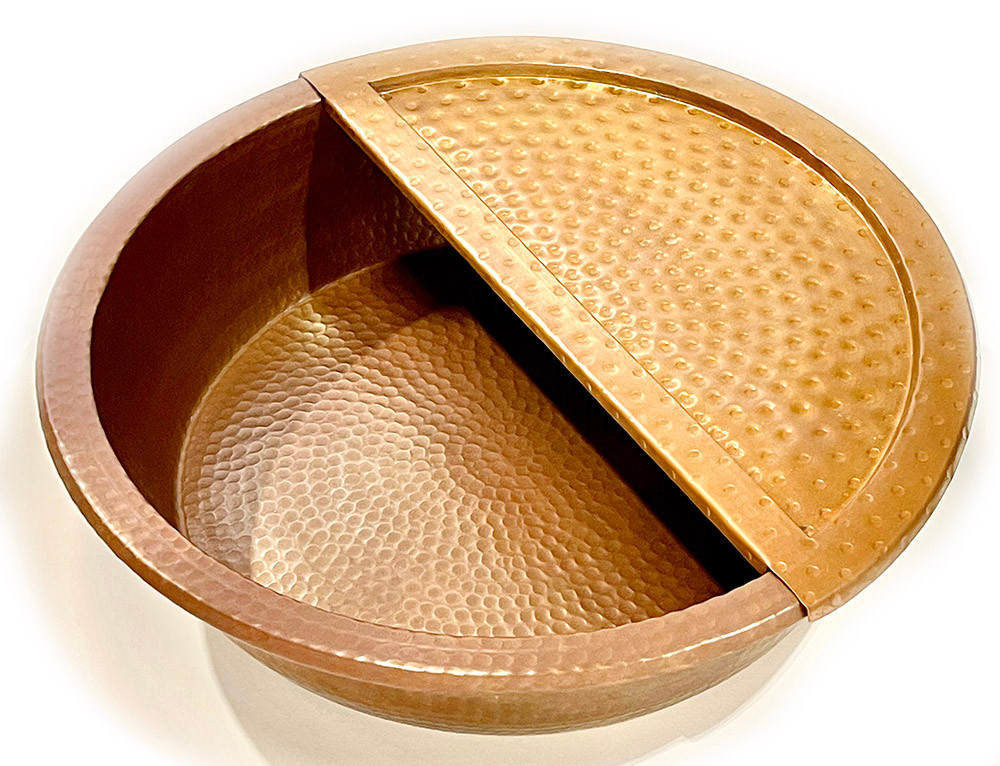

Spa (PED17) Foot Soak Hammered Copper Pedicure Bowl
$450.00
Write a Review

Spa (PED17) Foot Soak Hammered Copper Pedicure Bowl
Copper Spa Foot Soak Bowl
Compact, Lightweight Round Bowl with flat bottom perfect for a spa pedicure. New rolled over edge detail for a better safer grip.
17"x 17"x 4.5" outside dimensions
15"x 15" inside
The PED17 without water weighs 3lbs. Filled half full, it will weigh approx. 12lbs.
Water capacity: 2 gallons at half full, 5 gallons full (water only)
Please note, Due to the intended use of the spa bowl, returns cannot be accepted. Spa bowls will not be refunded or exchanged. Please call with any questions relating to the spa bowls prior to purchase. Drain openings are available for a minimal fee.
**Please note: code compliance can vary by your state and local government, please confirm if you will need code certs before purchase. This is something that we do NOT provide.
Need a specific size or requirement you do not see here, let us know and we can explore having them made for you.
Copper foot spa bowls (often used in pedicures for their antimicrobial properties and aesthetic appeal) are generally not compatible with certain additives, chemicals, or harsh treatments that can damage the copper surface, cause corrosion, pitting, discoloration, or remove protective patina/finishes.
What to Avoid Adding or Using in a Copper Foot Spa Bowl
- Harsh or abrasive chemicals — Things like undiluted bleach, strong acids, ammonia-based cleaners, hydrogen peroxide-based products, or chlorine-heavy additives. These corrode copper and damage its finish.
- Citronella, lemon oil, or citrus-based cleaners/additives — Commonly warned against in copper pedicure bowl care guides, as they dull the surface or cause reactions.
- Barbicide or similar strong disinfectants (beyond mild dilutions) — These can scratch, dull, or make the bowl brittle over time.
- Abrasive scrubs, firm brushes, or steel wool — For cleaning or during use; they scratch the copper.
- Highly acidic or corrosive bath products — Such as certain strong bath salts (especially if uncoated copper), chlorine-based bombs/soaks, or acidic essential oils in high concentrations. (Mild Epsom salts or neutral soaks are often fine, but check specific bowl care instructions.)
- Hot liquids/objects — Avoid pouring boiling water directly in or placing very hot items, as extreme temperature changes can warp or damage the metal.
Copper bowls are prized because they are naturally antimicrobial (helping reduce bacteria without jets or recirculation), but they require gentle care. Stick to warm water, mild soaps, or approved mild bleach solutions (e.g., 1:3 bleach-to-water for disinfection between uses), and always rinse and dry thoroughly afterward.
For best results in a spa setting, many professionals use plain warm water or gentle additives to preserve the bowl's integrity and beauty.
Safe additives for copper foot spa bowls (commonly used in pedicures) focus on gentle, non-corrosive options that preserve the bowl's finish, avoid accelerating oxidation/tarnish, and leverage copper's natural antimicrobial properties. Many copper bowls develop a patina over time, which is normal and protective, but harsh additives can pit, dull, or damage uncoated or lacquered surfaces.
Recommended Safe Additives and Practices
- Plain warm water — The simplest and safest choice. Copper's antimicrobial qualities (killing bacteria like E. coli on contact) make plain soaks effective and hygienic without extras.
- Mild soaps or gentle liquid dish soap — For basic foot cleansing during the soak. Use sparingly, rinse thoroughly afterward.
- Epsom salts (magnesium sulfate) — Often used in foot soaks for relaxation and muscle relief. Many sources indicate mild salts are generally okay in moderation, but avoid heavy or prolonged use if the bowl is uncoated, as salts can promote oxidation over time. Rinse and dry the bowl immediately after.
- Neutral essential oils (in low concentrations) — A few drops of skin-safe oils like tea tree (antimicrobial), lavender (soothing), or eucalyptus. Avoid citrus-based ones (e.g., lemon, lime, citronella) as they can react with copper and dull the surface.
- Fresh citrus slices (occasional, mild use) — Some older salon suggestions include lemon slices for a refreshing scent, but use sparingly and not concentrated, as acidity can affect the finish.
- Hospital-grade disinfectants or mild bleach solutions (for cleaning between uses, not during soaks) — A diluted mix (1 part bleach to 3 parts water) is widely recommended by manufacturers for post-service disinfection. Apply with a soft cloth, let sit briefly if needed, then rinse and dry completely. This isn't an additive for the client's soak—it's for bowl maintenance.
Tips for Best Results
- Stick to warm (not boiling) water to prevent thermal stress on the metal.
- Always rinse thoroughly after any additive.
- Many professionals prefer minimal additives to highlight copper's natural benefits (antimicrobial action, heat retention, potential mild detox effects from trace copper ions).
- For a luxurious yet safe experience, plain warm water or mild Epsom salt soaks are popular in spas using copper bowls, as they keep things simple, effective, and bowl-friendly.
Yes, you can use an ionizer (referring to an ionic foot detox machine/array) in a copper bowl, and in fact, it's commonly done and even recommended by many providers in the ionic detox/foot bath industry.
Why Copper Bowls Are Popular (and Often Preferred) for Ionic Foot Baths
- Copper is an excellent electrical conductor. In ionic detox systems, which involve a low-voltage current through saline water to generate ions, the copper bowl itself acts as an additional conductor. This enhances electron flow, increases negative ion production, and is said to amplify the treatment's effects (according to proponents).
- Many professional-grade ionic detox setups (e.g., Optimum, Hymbas, or similar brands) specifically sell or recommend pure copper tubs/bowls for this purpose, often pairing them with Himalayan salts for better conductivity and osmosis-like effects.
- Some sources describe copper as the "#1 choice" for ionic foot detox because it boosts conductivity compared to plastic basins.
Important Caveats and Potential Issues
- Electrolysis and Corrosion — The process runs a current through salted water, causing electrolysis. This accelerates wear on any metal involved, including the copper bowl (and especially the array's electrodes, usually stainless steel or similar). Over time, without protection, the copper can tarnish, develop patina, darken, or show pitting/erosion from the saline solution and current.
- Recommendation from Manufacturers/Sellers — Most advise using a plastic liner (or disposable bag) inside the copper bowl to protect it from direct contact with the electrolytic solution. This prevents excessive wear while still allowing the copper to contribute to conductivity (via proximity or partial contact). Skipping the liner can lead to faster degradation or permanent discoloration.
- Maintenance — After use, rinse thoroughly, dry immediately. Natural patina is normal and protective, but heavy electrolysis can cause more noticeable changes.
Bottom Line
If you're using a standard ionic foot detox/ionizer setup in a copper foot spa bowl:
- It's compatible and often beneficial (enhanced ion production).
- Use a liner for longevity to avoid damaging the bowl.
- Plain copper bowls (uncoated, pure) work best; avoid if your bowl has a lacquer/coating that might react poorly.
Note that scientific evidence for ionic foot detox actually removing toxins from the body is limited or debunked in many studies (color changes are usually from electrode corrosion, not detox). But if you're doing it for relaxation, antimicrobial copper benefits, or as part of a spa service, a copper bowl is a solid (and stylish) choice with the precautions above.
If this is for a specific brand/model of ionizer or bowl, share more details for exact advice!
Limited Sink Warranty
Copper Sinks will replace without charge, (excluding labor) any copper sink supplied by Copper Sinks that is proven to be defective, with an equivalent replacement, within the specified appropriate period from date of purchase, to the original owner, provided it has been used solely in a residential application and installed in accordance with the Copper Sinks installation instructions, used and cleaned as recommended, and not damaged due to abuse, misuse, or negligence.
Please be aware that all rustic sinks and tubs have a finish that is by nature uneven and variable in color and pattern. Since our copper products have a living finish, the finish is not covered under this warranty. In addition, the dimensions and consistency of shape can vary considerably. We offer these sinks and tubs with the view that these variations are part of the rustic character and charm, and do not constitute defects. Copper is also malleable. Materials that are malleable can be hammered or stretched or rolled into various shapes with relative ease, while still maintaining their strength. Some metals, like copper, are also ductile, which means they are flexible. Should your sink arrive with a bent edge, it can be hammered back into position with little effort. Use a wooden or rubber mallet to straighten any edges that may have been altered in shipping.
(In the event of a warranty claim, the owner will be required to provide proof of purchase - save sales receipt.)
This warranty will not cover any damages which might be caused by the product. (Some states do not allow such limitation, so this reference may not apply to you.)
Copper Sinks reserves the right to inspect any sink reported to be defective prior to replacement of the sink. All decisions are final. Replacement cost EXCLUDES transportation and any labor costs for the removal or re-installation.
Copper Sinks shall not be liable in case of:
Improper installation/modification
Damages resulting from abuse, such as heavy impact or dropped objects
Improper care or maintenance
Improper applications (such as exposure to corrosive chemicals, photographic solutions, etc.)
Any modifications made to the product after it left Copper Sinks premises
Commercial application
This warranty supersedes all other warranties, expressed or implied.
The foregoing warranties are exclusive and made only for the buyer. NO OTHER WARRANTY, WHETHER EXPRESS, IMPLIED, OR STATUTORY, INCLUDING ANY WARRANTY OF MERCHANT ABILITY OR FITNESS FOR A PARTICULAR PURPOSE SHALL BE DEEMED TO EXIST IN CONNECTION WITH ANY OF THE GOODS OR SERVICES SUPPLIED HERE UNDER, AND ANY IMPLIED WARRANTIES FOR A PERIOD GREATER THAN THE WARRANTY PERIOD CONTAINED IN Copper Sinks LIMITED WARRANTY ARE HEREBY EXCLUDED. Copper Sinks SHALL NOT BE LIABLE FOR ANY INDIRECT, INCIDENTAL, SPECIAL OR CONSEQUENTIAL DAMAGES IN ANY WAY RELATED TO THE GOODS OR SERVICES SUPPLIED HEREUNDER. No employee, agent, or other person is authorized to give any warranties on behalf of Copper Sinks. in addition to or different from the herein given to assume for Copper Sinks. Any other liability in connection with any of its products except if in writing which is signed by an officer of Copper Sinks and expressly and intentionally gives such warranties or assumes such liability.